AUA 2026 Conference Coverage
Focus on OAB and BPH

Lessons of the Past: Why Do Minimally Invasive Therapies for Benign Prostatic Hyperplasia Fail?
While minimally invasive surgical therapies have transformed benign prostatic hyperplasia (BPH) care by minimizing recovery time and safeguarding sexual function, post-surgical outcomes are not always guaranteed. In a plenary session at the 2026 Annual Meeting of the American Urological Association (AUA 2026), experts in surgical interventions for BPH discussed strategies for addressing surgical failure and improving outcomes for patients with residual urinary symptoms.
May 28, 2026
Read more
Treatment Delays Increase the Risk for Complications in Patients with Benign Prostatic Hyperplasia
Delaying medical treatment for benign prostatic hyperplasia (BPH) for more than 1 year after diagnosis significantly raises the risk of both short- and long-term complications, according to real-world clinical data presented at the 2026 Annual Meeting of the American Urological Association in Washington, D.C.
May 28, 2026
Read more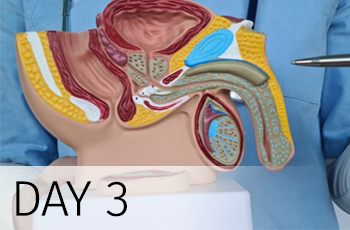
Vibegron Had No Impact on Sexual Function in Men with Benign Prostatic Hyperplasia
Adding vibegron to first-line therapy for benign prostatic hyperplasia (BPH) may be a safe option for men looking to preserve sexual function, according to exploratory data from the phase 3 COURAGE trial, presented at the 2026 Annual Meeting of the American Urological Association (AUA 2026) in Washington, D.C.
May 28, 2026
Read moreRelated Articles

Vibegron Effectively Treats Overactive Bladder in Older Men with Benign Prostatic Hyperplasia
Vibegron can treat symptoms of overactive bladder (OAB) safely and effectively in older adults with benign prostatic hyperplasia (BPH), with comparable benefits to those seen in younger patients, according to an analysis presented at the 2026 Annual Meeting of the American Urological Association (AUA 2026) in Washington, D.C.
May 26, 2026
Read more
Medication Use After Surgery for Benign Prostatic Hyperplasia Is the Norm Rather than the Exception
Real-world data from a large clinical database showed that many patients continue to use medications to relieve lower urinary tract symptoms (LUTS) after undergoing surgical procedures for benign prostatic hyperplasia (BPH). A series of studies presented at the 2026 Annual Meeting of the American Urological Association in Washington, D.C. showed that a large proportion of patients were using monotherapy or combination medical therapy for BPH within 2 years after surgery.
May 26, 2026
Read more
Glucagon-Like Peptide-1 Receptor Agonists May Stave Off Prostate Surgery for Men Treated with 5-Alpha Reductase Inhibitors
Emerging real-world evidence suggests that glucagon-like peptide-1 (GLP-1) receptor agonists may augment the therapeutic effects of 5-alpha reductase inhibitors (5-ARIs) in patients with benign prostatic hyperplasia (BPH). Data from a nationwide claims database, presented at the 2026 Annual Meeting of the American Urological Association in Washington, D.C., showed that taking GLP-1 agonists alongside 5-ARIs may decrease the risk of surgical intervention in patients with BPH.
May 26, 2026
Read more
Aquablation Shows a Favorable Long-Term Safety Profile in the Treatment of Benign Prostatic Hyperplasia
Aquablation has emerged as a safe long-term treatment option for men with benign prostatic hyperplasia (BPH) who are hoping to preserve sexual function and minimize their risk for post-surgical complications, according to new results presented at the 2026 Annual Meeting of the American Urological Association in Washington, D.C. Data collected over a 3-year period at the Sheba Medical Center in Tel Aviv, Israel showed that patients undergoing Aquablation procedures for BPH have a low risk of severe long-term complications.
May 26, 2026
Read more
Prostatic Urethral Lift May Provide More Durable Symptom Relief than Water Vapor Thermal Therapy
Men who underwent prostatic urethral lift (PUL) procedures were more likely to discontinue medical therapy for benign prostatic hyperplasia (BPH) 6 months after the intervention compared with those treated with water vapor thermal therapy (WVTT), according to a retrospective analysis presented at the 2026 Annual Meeting of the American Urological Association (AUA 2026) in Washington, D.C.
May 27, 2026
Read more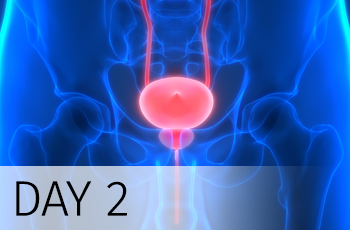
Long-Term Data Showcase the Therapeutic Potential of Optilume
Over the past decade, the treatment options for benign prostatic hyperplasia (BPH) have been transformed by minimally invasive therapies that offer quick symptom relief and lower complication rates while aiming to preserve sexual function. The Optilume catheter system, which combines mechanical dilation of the prostatic urethra with localized delivery of paclitaxel to maintain long-term urethral patency and improve urine flow, has gained popularity as a safe, effective option for addressing residual symptoms associated with BPH. Recent findings presented at the 2026 Annual Meeting of the American Urological Association (AUA 2026) in Washington, D.C. showed that treatment with the Optilume BPH catheter system maintained symptomatic relief and functional improvements long-term, up to 5 years, in patients with BPH.
May 27, 2026
Read more
Surgical Regret Is Often Part of the Benign Prostatic Hyperplasia Journey
In a time when men have multiple surgical options for the treatment of lower urinary tract symptoms (LUTS) associated with benign prostatic hyperplasia (BPH), selecting the right treatment plan is only half the battle. Findings presented at the 2026 Annual Meeting of the American Urological Association in Washington, D.C. showed that patients who undergo surgery for BPH often live to regret their decisions, especially when the relief of LUTS is suboptimal or incomplete.
May 27, 2026
Read more
Reversible Implants Up the Game in the Minimally Invasive Treatment of Benign Prostatic Hyperplasia
Men looking for relief of lower urinary tract symptoms (LUTS) associated with benign prostatic hyperplasia (BPH) are increasingly turning away from the traditional menu of procedures and looking to innovative technologies that can preserve sexual function, avoid the operating room, and ensure a quick recovery. Temporary, reversible prostatic devices may address those needs, according to urologists specializing in the minimally invasive treatment of BPH.
May 27, 2026
Read more
© 2026 Wolters Kluwer. All right reserved.